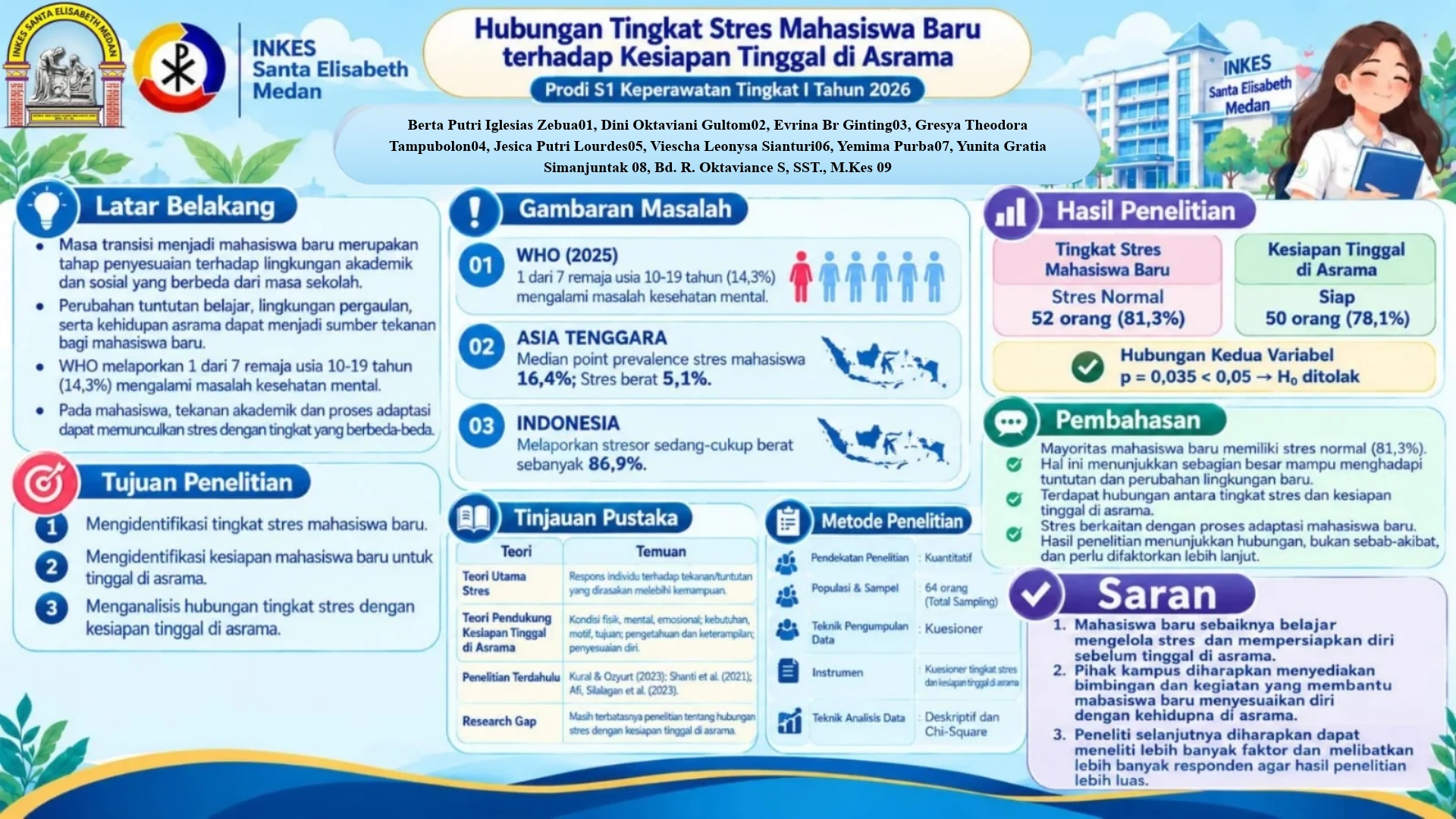
Transitioning to dormitory life can expose first-year students to new routines, expectations, and social environments, potentially contributing to stress and challenges in adjustment. This study examined the association between stress levels and readiness for dormitory life among first-year nursing students at Institut Kesehatan Santa Elisabeth Medan in 2026. A quantitative, cross-sectional correlational design was used. The study included 64 first-year students residing in the dormitory, selected through total sampling. Data were collected using the stress subscale of the Depression Anxiety Stress Scales–21 (DASS-21) and a questionnaire measuring readiness for dormitory life. Descriptive statistics and the chi-square test were used for analysis, with statistical significance set at p < 0.05. Of the 64 participants, 52 (81.3%) had normal stress levels, 11 (17.2%) had mild stress, and one (1.6%) had moderate stress. Fifty participants (78.1%) were classified as ready for dormitory life, while 14 (21.9%) were classified as not ready. Stress level was significantly associated with readiness for dormitory life (p = 0.035). These findings support the importance of providing adjustment and stress-management support for students entering dormitory life. Because the study used a cross-sectional design at a single institution, the findings indicate an association and should not be interpreted as evidence of causation.
Keywords
stress, dormitory life, readiness, first-year nursing students, cross-sectional study