PPAVI PEDULI KUSTA : Empowering Leprosy Sufferers Through MSME Strengthening and Healthcare Services
Update
Published on: 20 Aug 2026, 12:27 by Antonius Trijuni Dilianto
Audience: Public
Writer:

Leprosy remains a chronic infectious disease and a significant public health challenge in Indonesia, which ranks third globally in new leprosy cases after India and Brazil. The deep-rooted stigma against leprosy sufferers leads to severe discrimination and social isolation, even long after patients have been medically cured. In response to this reality, the Association of Indonesian Vocational Academic Leaders (Perkumpulan Pimpinan Akademika Vokasi Indonesia / PPAVI) launched the "PPAVI Peduli Kusta" (PPAVI Cares for Leprosy) program — a community service initiative that integrates vocational education with social compassion to comprehensively empower leprosy sufferers.
The Gema Kasih Leprosy Rehabilitation Center, located in Dusun III, Jaharum B Village, Galang District, Deli Serdang Regency, North Sumatra, is a social ministry of the Franciscan Sisters of Saint Elisabeth (FSE), founded by Sr. M. Laura Oesterveer FSE in 1975. Born from deep compassion for leprosy patients who were rejected by society and even their own families despite being medically cured, the center currently shelters 44 individuals from 19 families, comprising 27 males and 17 females ranging from children to the elderly.
Health-wise, the center has 2 residents with moderately active leprosy and 25 others showing early symptoms of skin lesions and irritation. Economically, residents are empowered through a furniture-making enterprise (mebelair) producing tables, chairs, cabinets, kitchen sets, and various quality products. However, their market remains limited to the internal FSE congregation community, while rising costs of basic necessities make their earnings increasingly insufficient.
To date, total donations collected have reached IDR43,850,016
Approximately USD2,700
PPAVI Peduli Kusta Program Activities
The program is implemented through a collaboration of five educational institutions from PPAVI’s Sumatra Region: STIKes Santa Elisabeth Medan, Prayoga Pharmacy Academy Padang, John Paul II Health Academy Pekanbaru, Faculty of Health at Musi Charitas Catholic University Palembang, and STIE Bentara Pesada Batam. The program pursues three main objectives: developing independence and capacity building for leprosy sufferers, fostering inter-institutional collaboration as a realization of the Three Pillars of Higher Education (Tridharma), and implementing the Merdeka Belajar (Freedom to Learn) campus initiative through competency, soft skills, and character development.
The program’s activities include: a Poster and Video Competition promoting leprosy patients’ furniture products in January–February 2024, which attracted participation from university students across Indonesia; a Leprosy Awareness Educational Seminar on April 17, 2024, aimed at eliminating stigma and providing psychological support; and the core activities on July 26, 2025, which focused on strengthening the furniture MSME and activating the medical treatment room.
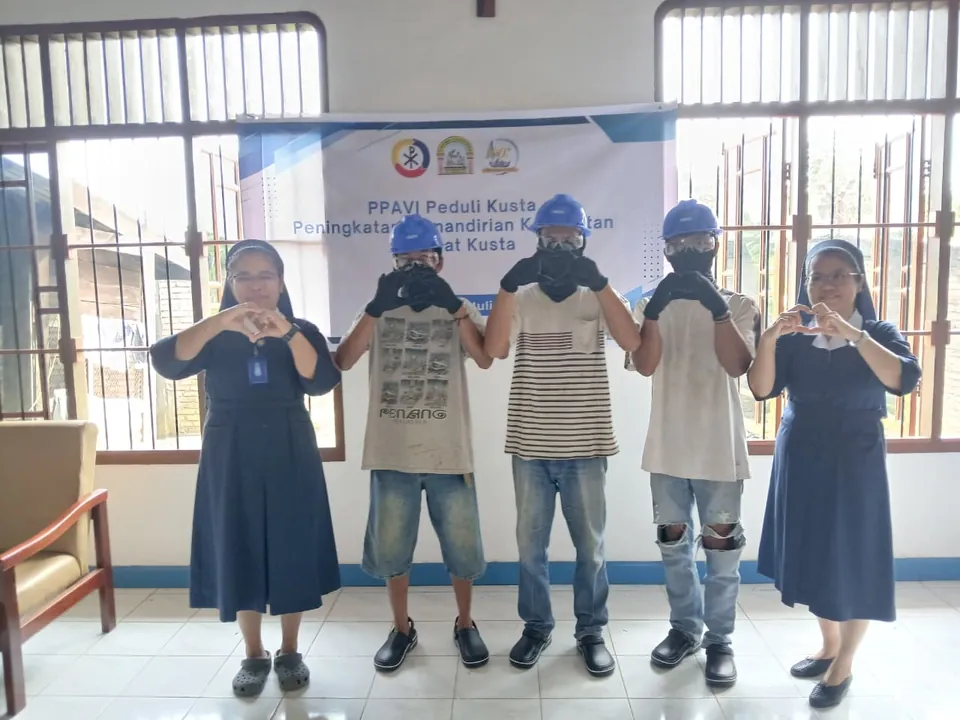
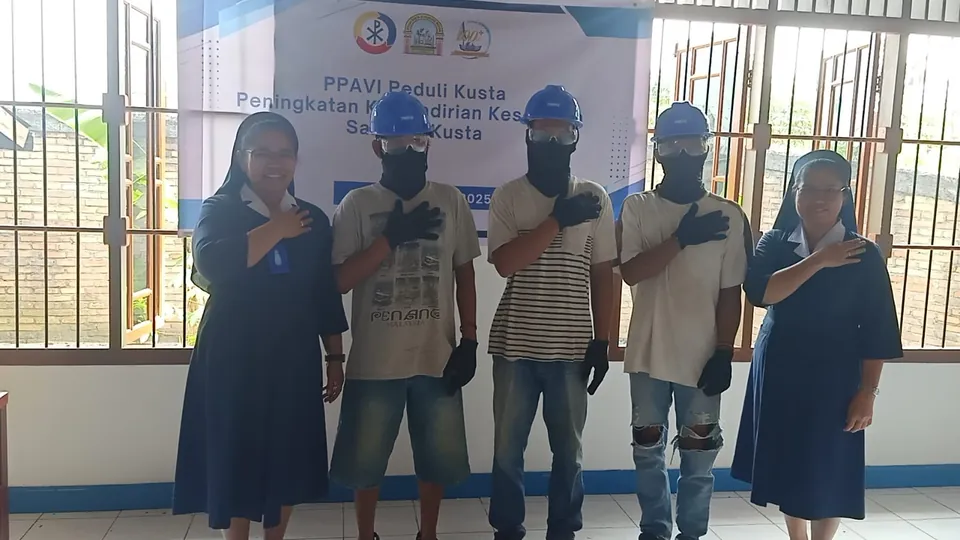
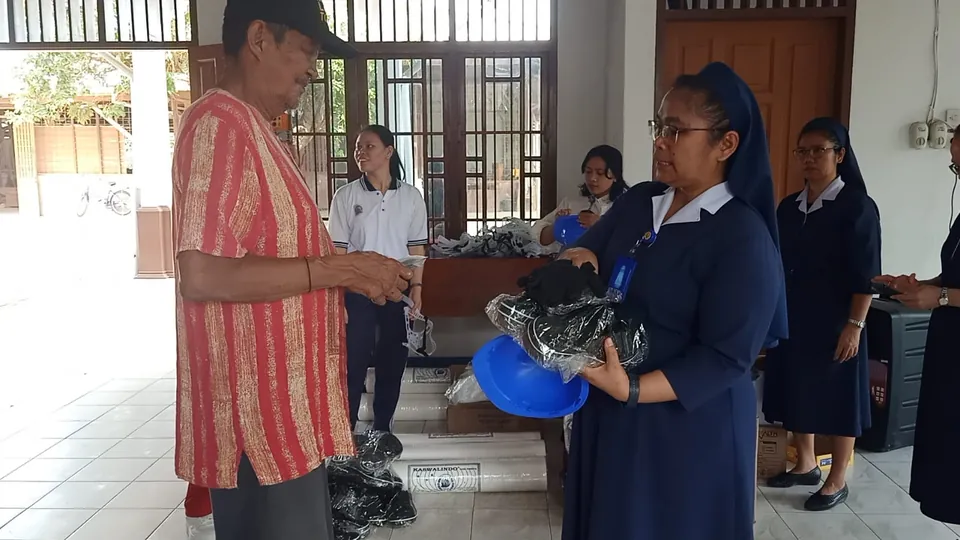
For MSME strengthening, PPAVI provided comprehensive personal protective equipment (PPE) for 19 active workers, including safety helmets, dust masks, protective goggles, safety footwear in various sizes, socks, and anti-slip gloves. This provision is particularly critical because leprosy patients are vulnerable to unnoticed injuries due to loss of skin sensation. For the medical facility, PPAVI equipped the treatment room with medical instruments (wound dressing sets, an autoclave for sterilization, a weighing scale), essential medications (including leprosy-specific drugs such as prednisolone and kanamycin injections), and comprehensive wound care supplies. A sustainable healthcare system was established through partnership with STIKes Santa Elisabeth Medan, which continues routine health services every Saturday.
Results and Impact
Evaluation results showed exceptionally high satisfaction: 78.9% of residents expressed being very satisfied and 21.1% expressed satisfaction with the program. The furniture workers shared their joy at finally having adequate personal protection while working. Residents with active leprosy wounds expressed deep gratitude as the community service team treated their wounds with genuine care and taught them self-care wound management techniques at home.
Fundraising Campaign
Beyond direct activities, PPAVI has also been raising donations to support the ongoing operations of the Gema Kasih Leprosy Rehabilitation Center. To date, total donations collected have reached IDR 43,850,016 (approximately USD 2,700). All donated funds are managed with full transparency and accountability, allocated for PPE procurement, medications, medical equipment, and operational costs. PPAVI invites all members of society, educational institutions, corporations, and individuals with compassion to participate in this program. Every donation, regardless of the amount, represents a tangible expression of humanitarian solidarity for our fellow citizens in need.
Program Sustainability
The PPAVI Peduli Kusta program has proven effective as a comprehensive and sustainable model for empowering leprosy sufferers. The success of this cross-institutional collaboration in optimizing resources and expertise demonstrates that the complex challenges faced by leprosy patients can be addressed through synergistic partnerships. PPAVI is committed to continuing and expanding this program, including training social workers to provide competent first aid, promoting furniture products to a broader market, and educating the public to transform the stigma surrounding leprosy. Together, we can care for and empower those who have been marginalized, because every human being deserves a life of dignity.